
An embezzlement investigation usually moves from internal detection to forensic evidence gathering, then interviews and subpoenas, a law enforcement referral, and finally charging, plea or trial. Internal investigators, forensic accountants, private investigators, and police, FBI or IRS agents may each play a part. Managers are a common perpetrator group, according to ACFE research, and more than 90% of federal defendants plead guilty.
TL;DR:
- Start with reconciliations and source records, then keep the internal review confidential, independent, and documented before deciding whether a confirmed loss warrants referral.
- Bank statements, payroll records, invoices, and accounting audit logs can establish money movement; logs may identify who changed entries and when.
- If investigators contact you, ask for a lawyer before substantive questions, limit voluntary statements, preserve records, and document every contact with dates and names.
- Employers should preserve evidence with a clear chain of custody, exclude managers with a stake in the outcome, and avoid retaliation against cooperating employees.
- Internal reviews may finish within weeks, but federal investigations can last years; early asset tracing can support freezes, civil recovery, or later restitution.
Table of Contents
- How do embezzlement investigations typically start?
- What evidence and forensic techniques do investigators use?
- How do interviews, subpoenas and legal tools work?
- When does law enforcement take over, and what happens next?
- How long do these cases take, and how do they end?
- What should accused people and employers do right away?
- Why do independence and documentation protect the case?
- Why an objective process protects everyone
- How we help with embezzlement and corporate investigations
- FAQ
- Sources
How do embezzlement investigations typically start?
Most cases begin quietly. A reconciliation does not balance, a software flag fires, or a vendor payment looks wrong. Long-term research from the ACFE describes consistent warning signs, and many perpetrators have no documented history of fraud-related charges or convictions, according to ACFE research, so a clean record tells you very little.
Common red flags include:
- Unusual or round-dollar transactions that skip normal approval
- An employee living beyond their means or facing financial difficulties
- Control issues, such as refusing to share duties or take time off
- Gaps between bank statements and the general ledger
A defensible internal review starts small: request documents, run initial reconciliations, and hold only limited interviews. Independence and confidentiality matter because management influence can taint results. Our guide to defensible employee theft investigations covers the details. When the numbers confirm a loss, the review converts into a formal investigation or a referral to law enforcement.
What evidence and forensic techniques do investigators use?
Investigators pull the records that show where money moved: bank statements, canceled checks, invoices, payroll registers, expense reports, and accounting audit logs. Private investigators face limits that police do not, which we explain in our piece on banking records.
Digital records carry real weight. Accounting software audit logs often record the username and timestamp of edits, which can show who altered a record and when. Analysts also apply statistical tests such as Z-score outlier analysis and Benford’s Law to flag patterns that may be difficult for a human reviewer to spot. Practical write-ups on financial data validation and anomaly detection show how the same ideas work on everyday books.
Forensic accountants typically join when the data is large or the scheme is hidden, and IRS Criminal Investigation steps in where tax violations or forfeiture are involved.
The Enron investigation lasted five years and involved more than 1,800 interviews and over 3,000 boxes of evidence. Most cases are far smaller, but the example shows how far a complex probe can scale.
- Primary records: banking, payroll, invoices, expense reports
- Digital proof: audit logs with user IDs and timestamps
- Analytics: Z-score and Benford’s Law screening
How do interviews, subpoenas and legal tools work?
Interviews tend to follow the paper trail, not lead it. Investigators speak with witnesses, supervisors and victims first, and the suspect usually comes later, once the records are understood.
- Witness and victim interviews establish routines, access and who approved what.
- Voluntary suspect interviews happen when a person agrees to talk. You may stop at any time and ask for a lawyer.
- Custodial interrogation applies once someone is in custody, and the right to counsel attaches in that setting.
- Subpoenas compel witnesses or records. IRS Criminal Investigation, for example, can issue summonses and seize property for forfeiture.
- Search warrants let agents collect records or devices directly when asking would risk losing evidence.
Law enforcement often starts well before the accused knows. Investigators review financial records and trace assets early so that restraints and restitution remain possible. If you are contacted, treat even a friendly conversation as the start of a formal process.
When does law enforcement take over, and what happens next?
A referral can go to local police, the FBI, IRS Criminal Investigation or a U.S. Attorney. Federal criminal cases are initiated by the government through a complaint or a grand jury indictment. A complaint is a sworn statement used in unique circumstances, while an indictment is the usual route for a felony.
The formal sequence looks like this:
- Arrest or summons, then initial appearance
- Arraignment, where the indictment is read and a plea is taken
- Detention hearings or release conditions, which can include electronic monitoring
- Discovery, including government disclosure of exculpatory information
- Plea bargain or trial
- Sentencing, usually after a probation office presentence report
More than 90% of federal defendants choose to plead guilty rather than go to trial. Expect negotiation to matter more than courtroom drama.
How long do these cases take, and how do they end?
Timelines run from a few weeks for an internal clearance to years for a federal probe. The Enron matter, which lasted five years, sits at the far end. Anything depends on the volume of records, the number of people involved and how quickly agencies coordinate.
Early actions often come before any verdict:
- Restraining orders and temporary asset freezes
- Civil recovery actions to get money back
- Criminal forfeiture of proceeds
Possible endings include no charges, civil remedies, a plea with restitution, a trial conviction, or forfeiture. Because asset tracing starts early, repayment is often part of the conversation long before sentencing.
What should accused people and employers do right away?
If you are the accused:
- Ask for a lawyer before answering substantive questions.
- Limit voluntary statements until counsel advises you.
- Preserve your personal records and do not delete anything.
- Write down every contact with investigators, with dates and names.
If you are the employer:
- Keep the inquiry confidential and need-to-know.
- Preserve evidence with a clear chain of custody.
- Document every decision and why you made it.
- Keep management with a stake in the outcome out of the review.
- Avoid retaliation, because employer-led investigations carry separate liability if employees are punished for cooperating.
Pro Tip: Bring in outside forensic accountants or investigators early. Our corporate fraud investigation steps checklist shows what to hand them, and tax-related cases may also involve IRS warning signs worth reviewing.
Why do independence and documentation protect the case?
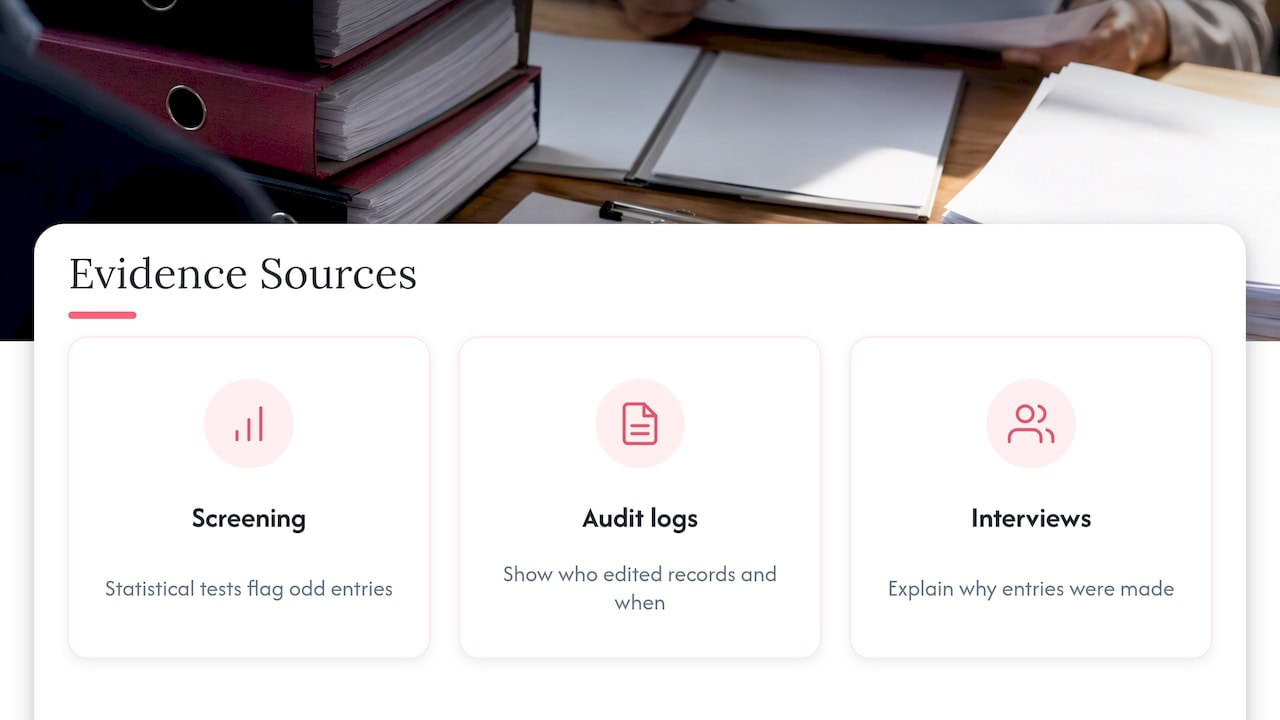
Good investigators combine methods: statistical screening points to odd entries, audit logs show who made them, and targeted interviews explain why. Each piece supports the others.
Former federal investigators stress that internal investigations must be independent, because management influence can produce flawed results that defense counsel will exploit.
When subpoena or forfeiture powers are needed, that is the point to escalate to agencies like IRS Criminal Investigation or the FBI.
Why an objective process protects everyone
We bring combined law enforcement and loss prevention experience to cases like these, and one lesson repeats: shortcuts hurt everyone. An employer who skips chain of custody loses the evidence. A suspect who is prejudged loses a fair hearing. Documented, neutral procedures protect the business and the accused alike, and they make later court scrutiny survivable. If you need confidential investigative support, we are ready to talk.
— Derek
How we help with embezzlement and corporate investigations
When a loss is suspected, a quiet, well-documented start decides how strong the case becomes. We offer:
- Private investigation services and surveillance investigation
- Asset search and corporate investigations
- Confidential intake, evidence preservation, a documented report, and coordination with your counsel
Contact us for a confidential consultation and tell us what you are seeing.

This article is general information, not a substitute for advice from a qualified lawyer. Consult a qualified legal professional about your own circumstances before acting on anything here.
FAQ
How long do embezzlement investigations take?
It depends on the size of the scheme. Internal reviews can wrap up quickly, while federal probes can run for years. The Enron investigation lasted five years.
Are embezzlement cases hard to prove?
They rely on documents, so strong records make them easier to prove. Audit logs, bank records and statistical analysis can tie specific changes to a specific person. Weak documentation or a biased internal review makes them harder.
Do you have to pay back embezzled money?
Often, yes. Investigators trace assets early so restraints and restitution stay possible, and a plea or conviction commonly includes repayment. Civil recovery and forfeiture can also apply.
Do most embezzlement cases go to trial?
No. More than 90% of federal defendants plead guilty, often through plea bargains. Sentencing then follows a presentence report.