
Executive residence security is an integrated, risk-based protection program that safeguards the principal, family, household staff, and property through layered physical, technical, operational, and digital controls — and if you manage or occupy a high-profile residence today, three actions should be on your desk immediately: commission a formal risk assessment, secure the principal’s communications, and audit every perimeter access point and lighting gap.
- Order a formal risk assessment aligned to ASIS International standards and CPTED (Crime Prevention Through Environmental Design) principles
- Secure principal communications — encrypted devices, vetted contact lists, and a documented protocol for sensitive conversations
- Audit perimeter access and lighting — gates, driveway geometry, delivery points, and every exterior light fixture
These three moves, backed by the operational standards of ASIS International, CPTED, and UL 2050 residential monitoring, form the foundation of any credible program. Hubsecurityandinvestigativegroup has built executive residential programs around exactly this framework since 2004.
Key Takeaways
A credible executive residence security program integrates physical, technical, operational, and digital controls under a single accountable Head of Security, assessed quarterly against ASIS, CPTED, and UL 2050 standards.
| Point | Details |
|---|---|
| Three immediate actions | Commission a risk assessment, secure principal communications, and audit perimeter access and lighting. |
| Quarterly assessments | Run a 9-item checklist every quarter; each review takes approximately 90–120 minutes. |
| Program cost range | Basic single-property programs typically cost $300,000–$450,000 annually; comprehensive programs reach $600,000–$1,000,000. |
| Standards to request | Ask any provider to align deliverables to ASIS International, CPTED, and UL 2050 monitoring compliance. |
| Hubsecurityandinvestigativegroup | Offers assessments, residential security teams, TSCM partnerships, and executive protection with 75+ years of combined law-enforcement experience. |
Table of Contents
- What does executive residence security actually include?
- Why standard home security fails high-profile residents
- Core protection layers: a prioritized checklist
- Operational assessment checklist (quarterly)
- How do you choose the right executive residence security provider?
- Legal and privacy considerations you need to understand
- Your 30/90/180-day action plan
- How we approach executive residence security at Hub Investigative Group
- Hub Investigative Group’s residential security services
- Sources
What does executive residence security actually include?
The industry term for this discipline is residential executive protection (REP), and it goes well beyond a monitored alarm and a camera system. Executive-level home security treats the principal as the protection focus, not the property, and it applies zone-based design across three concentric rings: outer, middle, and inner.
Core components of a residential executive protection program:
- Perimeter control — fencing, gates, vehicle barriers, and driveway geometry that slows unauthorized approach
- Access control — credentialed entry systems, visitor logs, and delivery protocols
- Surveillance — camera placement at thresholds and approach lines, not scenic coverage
- Alarm monitoring — UL 2050-compliant central station monitoring with defined response SLAs
- Safe/refuge room — hardened interior space with independent communications and supplies
- Secure communications — encrypted devices and documented protocols for the principal and family
- Cyber hardening — network segmentation, smart-home device audits, and guest Wi-Fi isolation
- Staff vetting — background checks, credentialing, and ongoing behavioral monitoring
- Intelligence monitoring — open-source and social-media threat tracking tied to the principal’s risk profile
- Emergency coordination — pre-established relationships with local law enforcement and medical services
Key roles in a residential security team:
- Residential Security Director (Head of Security) — program owner, threat assessment lead, vendor manager
- Residential security officers (RSOs) — on-site rotating agents handling access, patrol, and incident response
- TSCM specialists — technical surveillance countermeasures contractors, typically engaged quarterly
- Intelligence/analyst contractors — open-source monitoring and threat-pattern analysis
- Vetted vendors — housekeeping, maintenance, and delivery personnel cleared through a documented screening process
The operational difference between a residential security team and mobile executive protection is significant. Mobile EP moves with the principal. The residential team holds the fixed base, establishes a baseline of normal activity, and detects anomalies before they become incidents.
Pro Tip: Assign one person — the Residential Security Director — as the single point of accountability for the program. Distributed ownership across a property manager, a personal assistant, and a guard company is one of the most common structural failures we see.
Why standard home security fails high-profile residents
A monitored alarm and a Ring camera are designed for opportunistic crime. They are not designed for a motivated adversary who has spent weeks mapping your principal’s routine.
Threat trends specific to high-profile residences:
- Targeted surveillance and pattern-mapping of arrival/departure times
- Social-media-driven exposure of residence location, family members, and daily schedules
- Insider risks from unvetted household staff or contractors
- Motivated adversaries — disgruntled former employees, stalkers, or ideologically driven actors
- Cyber intrusion through smart-home devices as entry points to the principal’s network
Common failure modes in standard setups:
- Coverage gaps at transition points (garage entry, delivery areas, side gates)
- Predictable arrival patterns that create exploitable windows
- No vendor or visitor screening process
- Unmonitored smart devices on the same network as sensitive communications
- Alarm systems without UL 2050-compliant monitoring, meaning response times are undefined
Pro Tip: Transitions are the highest-risk moments in any residential protection program. The seconds between a vehicle stopping and a door closing — at the driveway, the garage, a delivery handoff — are when a principal is most exposed. These moments need specific operational controls and staff training, not just a camera pointed at them.
Core protection layers: a prioritized checklist
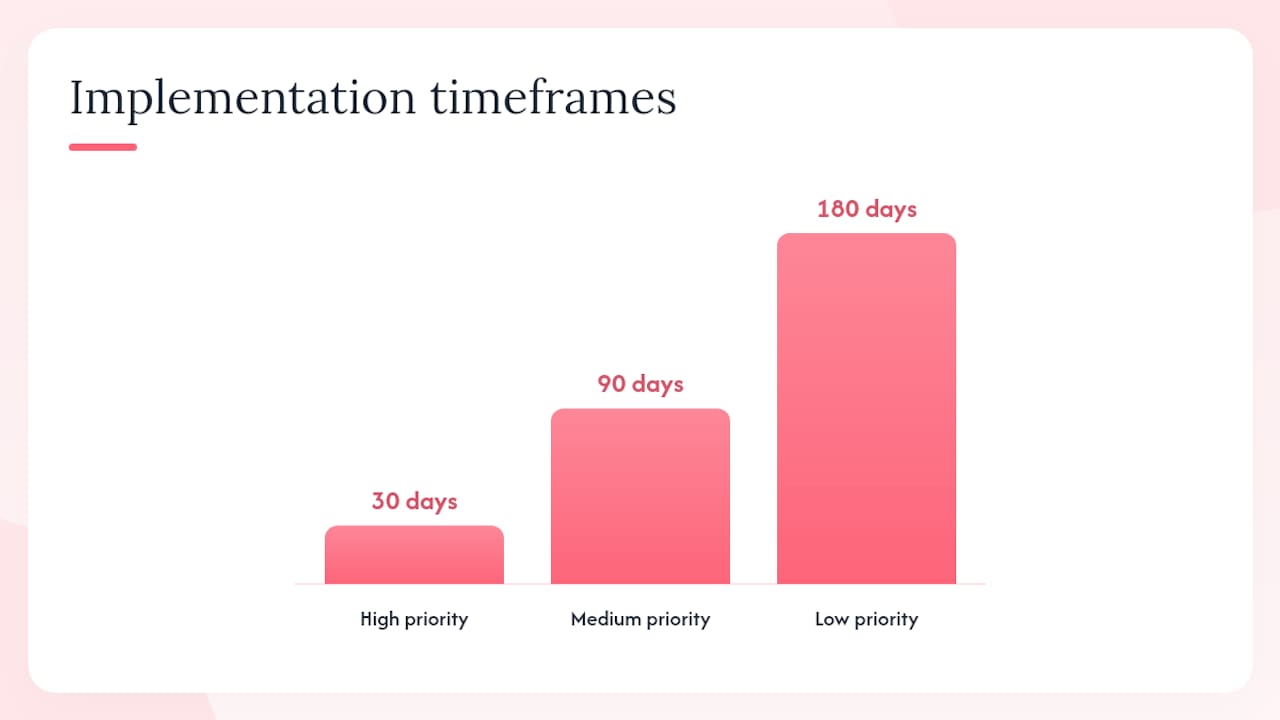
Organizing your program by priority lets you allocate budget where the risk is highest and phase in lower-priority controls without leaving critical gaps. The design anchors here are CPTED principles and ASIS International physical security parameters.
High Priority — implement within 30 days:
- Perimeter fencing and gate controls with defined access credentials
- Exterior lighting covering all approach lines and transition points
- CCTV at thresholds (front entry, garage, delivery point, rear access) with recorded, off-site storage
- UL 2050-compliant alarm monitoring with documented response SLAs
- Principal communications secured on encrypted devices
- Staff background checks completed and documented
Medium Priority — implement within 90 days:
- Safe/refuge room with independent power, communications, and 72-hour supplies
- Panic devices and duress codes for household members and key staff
- Cyber audit of all smart-home devices; network segmentation implemented
- Visitor and vendor credentialing protocol in writing and enforced
- TSCM sweep of primary residence and principal’s home office
Low Priority — complete within 180 days:
- Vehicle barriers or bollards at driveway entry
- Redundant communications (satellite or dedicated line) for the safe room
- Full integration of surveillance, access control, and alarm systems into a single monitoring platform
- Quarterly assessment calendar established and documented
Pro Tip: Position cameras to capture decision-quality views — the threshold of a door, the last 20 feet of a driveway approach, the delivery staging area. A single well-placed camera at a chokepoint is more operationally useful than six cameras covering open lawn. Quality of view drives response decisions; scenic coverage does not.
A basic single-property residential security program, covering staffing and technology, typically falls in the $300,000–$450,000 annual range. Comprehensive programs that add TSCM and intelligence monitoring can reach $600,000–$1,000,000.
Operational assessment checklist (quarterly)
A quarterly executive home security assessment covering multiple inspection items takes about one to two hours per run and aligns to ASIS International, CPTED, and UL 2050 monitoring standards. The Head of Security or a qualified external assessor should conduct it.
Residence perimeter inspection:
- Fence and gate integrity — no gaps, damage, or unauthorized modifications
- Exterior lighting — all fixtures operational, no dark zones at approach lines
- CCTV coverage — camera angles confirmed at all thresholds; recording and off-site backup verified
- Driveway geometry — no new obstructions or sight-line changes since last review
- Delivery and vendor access point — protocol compliance confirmed
Interior systems inspection:
- Access-control credentials — all active credentials reviewed; terminated staff removed immediately
- Alarm monitoring status — UL 2050 compliance confirmed with central station; response SLAs on file
- Safe room status — supplies, communications, and power source tested
- Panic devices — all devices tested for signal and response confirmation
Compliance alignment:
| Inspection Area | Standard |
|---|---|
| Perimeter and lighting design | CPTED principles |
| Physical security parameters | ASIS International |
| Executive protection program design | ASIS Executive Protection Standard |
| Alarm monitoring and response | UL 2050 |
Escalation trigger: if any inspection item reveals an unexplained device, signal anomaly, or evidence of unauthorized access, escalate immediately to a TSCM sweep before resuming normal operations.
How do you choose the right executive residence security provider?
Licensing, experience, and the ability to integrate physical and digital controls are the three filters that separate qualified providers from general guard companies.
Selection criteria:
- State licensing for armed and unarmed security services, plus liability insurance with adequate limits
- Documented residential program experience — not just commercial or event security
- Head of Security qualifications: law-enforcement or military background, formal EP training
- TSCM and cyber partnerships — the provider should have vetted contractors, not just a referral list
- Documented background-check process for all personnel assigned to the residence
- Staff training standards: conflict de-escalation, medical response, and access-control protocols
- Clear SLAs for monitoring response, incident reporting, and quarterly assessment delivery
Engagement timeline:
- Discovery and scoping — 1–2 weeks: threat assessment, site walk, risk profile development
- Program design — 2–3 weeks: layered control plan, staffing model, technology specification
- Installation and procurement — 4–8 weeks: physical systems, monitoring setup, vendor contracts
- Operations launch — ongoing: staff deployment, training, and first quarterly assessment
Cost factors that drive programs toward the higher end of the range include 24/7 armed staffing, TSCM, intelligence monitoring, and multi-property coordination. For detailed protection budget planning, factor in staffing as the largest single line item — a minimum of three rotating agents is required for true 24/7 single-property coverage.
Pro Tip: Ask every candidate provider for their incident log format and a sample quarterly assessment report. A provider who cannot produce both on request has not been running a documented program — they have been running a guard service.
Legal and privacy considerations you need to understand
Executive residence security operates inside a legal framework that varies by state, and violations carry real liability.
Key legal caveats:
- Audio recording laws — many U.S. states require all-party consent for recorded conversations; confirm your state’s standard before placing any audio-capable device
- Video surveillance — recording in areas with a reasonable expectation of privacy (bathrooms, changing areas) is prohibited; document camera placement decisions
- GPS and tracking — tracking third parties (vendors, contractors) without consent may violate federal and state law; consult counsel before deploying any tracking technology
- Staff privacy and employment law — background checks must comply with the Fair Credit Reporting Act (FCRA); monitoring of staff communications requires documented policy and consent
- Armed guard licensing — requirements vary significantly by state; verify your provider holds the correct license for your jurisdiction
Privacy best practices:
- Minimize data collection to what is operationally necessary
- Store video footage on encrypted, access-controlled systems with documented retention and deletion schedules
- Maintain a written access log for all footage reviews
Pro Tip: Before deploying any monitoring technology — cameras, audio devices, or tracking tools — have your provider’s compliance lead or your own counsel review the placement plan against your state’s specific statutes. A single non-compliant device can expose you to civil liability and compromise the admissibility of footage in any future legal proceeding.
Your 30/90/180-day action plan
A clear timeline turns a security decision into a program. Here is the sequence we recommend for any principal commissioning residential executive protection for the first time.
30-day actions:
- Commission a formal physical security risk assessment from a qualified provider
- Secure the principal’s communications — encrypted devices, vetted contact list, documented protocol
- Fix critical perimeter lighting gaps and gate control deficiencies identified in the initial walk
90-day actions:
- Implement prioritized layered controls from the High and Medium priority tiers
- Complete staff vetting and credentialing for all household personnel
- Commission a TSCM sweep if the assessment indicates any electronic surveillance risk
- Conduct first household and staff training drill — evacuation routes, panic device use, and visitor protocol
180-day actions:
- Complete system integrations — surveillance, access control, and alarm monitoring on a unified platform
- Full program operational handover with documented SOPs for the residential security team
- Set the quarterly assessment calendar and confirm the first scheduled review date
Commission your formal assessment now — it is the single action that makes every subsequent step faster, more targeted, and more cost-effective.
How we approach executive residence security at Hub Investigative Group
At Hubsecurityandinvestigativegroup, our residential programs are built on a multidisciplinary foundation: formal risk assessment, integrated technology, vetted and trained staff, TSCM contractor partnerships, and continuity with the principal’s travel and workplace security posture. We do not treat the residence as a standalone problem — it is one node in a broader protection picture.
Our team carries over 75 years of combined law-enforcement and loss-prevention experience, and that background shapes how we conduct assessments. We look for the gaps that a general security audit misses: the delivery protocol that has never been enforced, the smart thermostat on the principal’s primary network, the exterior camera that covers the garden but misses the garage threshold.
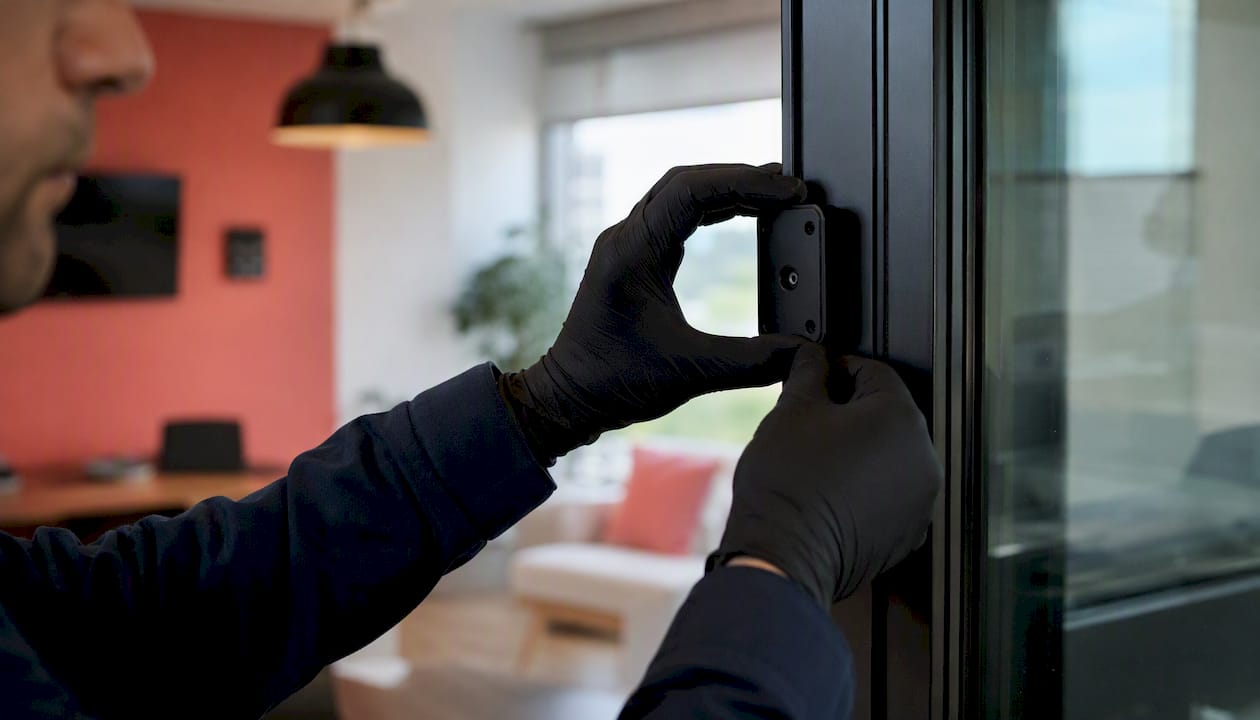
The residential programs we design range from single-property assessments for principals who want a documented baseline, to full residential security team deployments with 24/7 staffing, TSCM sweeps, and intelligence monitoring. In each case, the program is sized to the actual risk profile — not to a standard package. Our executive protection services extend naturally from the residence to travel and workplace environments, so the principal’s protection posture does not reset every time they leave the property.
Hub Investigative Group’s residential security services
Hubsecurityandinvestigativegroup offers the full range of services a high-profile residence requires: formal security assessments, residential security team deployment, TSCM contractor partnerships, secure communications consulting, and specialized investigations when a threat requires deeper inquiry. Our assessments follow the ASIS and CPTED-aligned framework described throughout this article, and every program we design comes with a documented quarterly review schedule.
If you are ready to move from concern to a documented, operational program, the right next step is a formal assessment. Contact Hubsecurityandinvestigativegroup to request your residential security assessment — we will scope the engagement, walk your property, and deliver a prioritized risk report you can act on immediately. You can also review our protection budget guidance to frame the investment before our first conversation.
Sources
Use these sources when commissioning work or reviewing a provider’s proposal:
- Executive Residence Security Assessment Checklist – Popprobe
- Executive-Level Home Security for High-Value Residential Properties – Somners
- Family Office Residential Security: How to Staff It Properly | Talent Gurus
- What’s Private Estate Security to Executive Protection? | EPWired