Drone In Florida Schools
Here is an expanded and fully developed version of your article, adding approximately 400 words to detail how Hub Security and Investigative Group utilizes drone technology across four key cities in Greater Boston, as well as detailing office complex and private commercial security applications.
Revolutionizing Safety: How Autonomous Drones Are Changing School and Commercial Security
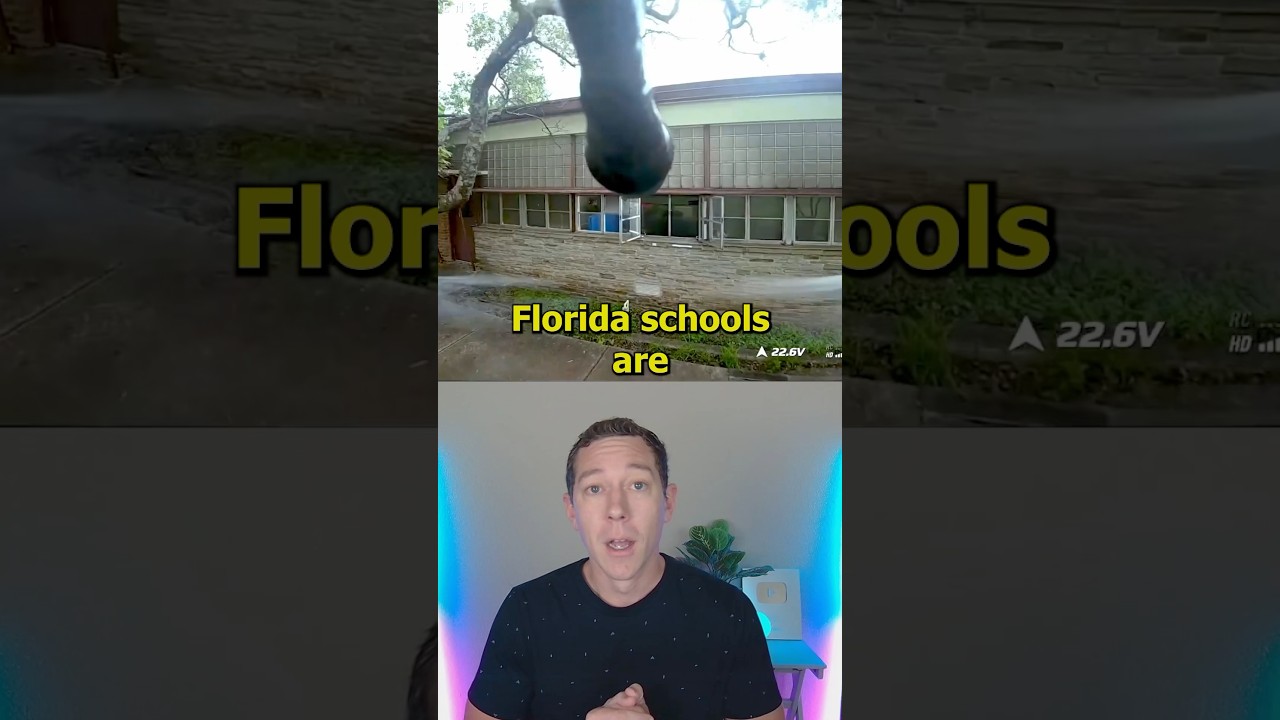
Florida schools are exploring the use of drones as a part of their security measures, particularly to address the threat of active shooters. A Texas-based company, Campus Guardian Angel, is leading a pilot program in three Florida school districts. The system, which is being funded by a $557,000 state budget allocation, aims to provide a rapid response to threats and improve situational awareness for law enforcement. With school safety being a top concern for parents and administrators nationwide, these automated aerial systems could revolutionize how we protect vulnerable facilities.
Why Massachusetts Schools Should Consider Autonomous Drone Security
Massachusetts school districts—from sprawling suburban high school campuses to urban multi-building districts in Boston, Worcester, and Springfield—face complex active-shooter response challenges. While many Commonwealth schools have invested millions in physical hardening, locked entry vestibules, and panic alarms, response time during an active incident remains the single most critical variable.
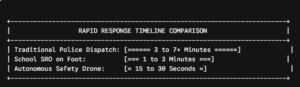
Deploying rapid-response “drone-in-a-box” security systems across Massachusetts public and private schools could dramatically shorten response windows. During an emergency, an automated drone can launch within five seconds and traverse an entire high school campus or indoor hallway in under 15 seconds—drastically outpacing foot patrols and reaching an active threat long before local police cruisers arrive on scene.
Furthermore, integration with local Massachusetts police departments and the State Police Air Wing would grant law enforcement instant “decision dominance”. Rather than officers entering a compromised building blind, live thermal and optical video feeds streamed directly to cruisers and dispatchers reveal the assailant’s precise location, weapons, and movement in real time. Drones equipped with non-lethal deterrents—such as high-intensity strobe lights, directional sirens, or pepper gel—can visually disorient and suppress a shooter, buying precious minutes for students to evacuate and for SWAT units to make entry.
By establishing state-level grant pilot programs similar to Florida’s allocation, Massachusetts lawmakers and school boards could pioneer next-generation aerial defense—transforming passively hardened schools into actively protected environments.
The Drone System
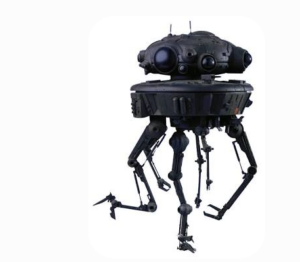
he Campus Guardian Angel system involves placing autonomous drones in secure, weather-proof charging boxes (“drone-in-a-box” stations) at strategic locations across campus grounds. When a silent panic button or alarm is activated, the drones can deploy within five seconds and reach the location of the threat in as little as 15 seconds. These drones are not controlled by school staff on-site. Instead, they are operated remotely by a team of certified pilots and tactical experts at a centralized command center in Austin, Texas.
Once airborne, the drones provide a high-definition live video feed directly to dispatchers and first responders, giving them crucial real-time intelligence on an assailant’s location, movement, and weaponry. This situational awareness gives law enforcement a significant advantage, allowing officers to assess the threat before entering a building. In specialized scenarios, tactical drones can even be equipped with non-lethal deterrents—such as pepper-spray pellets—or glass-breaking mechanisms to disrupt an active shooter and buy vital time for arriving officers.
Beyond passive video streaming, the system constructs a dynamic “digital twin” 3D model of the school campus. Overlaid with real-time sensor data and indoor telemetry, this digital map maps out optimal flight paths through narrow hallways and stairwells, enabling the drones to navigate interior structures at cruising speeds up to 50 mph.
Furthermore, the units act as two-way communications hubs. Integrated high-output speakers allow remote tactical teams to broadcast instructions to hiding students, direct responding officers toward the suspect’s exact position, or initiate direct verbal contact with the assailant. Dual strobe lights and loud directional sirens are engineered to visually disorient a shooter, forcing them onto the defensive during the critical first two minutes before police entry.
Hub Security & Investigative Group: Aerial Security in Greater Boston
While school districts test aerial defenses in Florida, private security providers in the Northeast are deploying similar unmanned aerial systems (UAS) to protect commercial assets, high-rise office parks, and multi-tenant campuses. Hub Security and Investigative Group, a premier Boston-based security firm, has integrated automated drone patrols to safeguard large-scale real estate and corporate hubs across four key cities in Greater Boston:
-
Cambridge: Protecting tech centers and research facilities along the Kendall Square innovation corridor, where drone surveillance monitors multi-acre corporate campuses, rooftop access points, and private research labs around the clock.
-
Quincy: Safeguard commercial office parks and industrial properties, utilizing scheduled night-vision thermal sweeps to detect unauthorized perimeter breaches or loitering after business
 hours.
 -
Newton: Deploying autonomous aerial perimeter patrols around executive office complexes and sprawling financial services campuses along the Route 128 corridor.
-
Somerville: Providing rapid-response aerial coverage for high-density commercial developments and retail transit hubs in Assembly Row, giving ground teams eye-in-the-sky visibility during large gatherings or incidents.
Office Complex & Commercial Site Security
For office parks and commercial properties, Hub Security and Investigative Group uses tethered and automated drone nests that act as continuous force multipliers. Rather than relying solely on fixed CCTV cameras with blind spots or slow foot patrols, a single drone can audit dozens of acres in minutes.
Integrated with localized access control and perimeter sensors, these drones instantly deploy when a fence line tripwire is triggered, verifying whether a alert is a false alarm or an active threat before dispatching human officers. Thermal imaging sensors allow guards to spot intruders hiding in dark parking garages, loading docks, or densely landscaped grounds.
The Debate and Concerns
While proponents compare aerial systems to indoor fire sprinklers—on-site, automated, and ready to respond in seconds—the technology also prompts significant debate. Technology experts point to potential cybersecurity vulnerabilities, fearing remote control links could be intercepted or jammed. Questions also remain about coordinating remote pilots hundreds of miles away with local municipal police on the ground during high-stress crises.
Furthermore, deploying armed or tactical drones raises ethical, legal, and privacy concerns, especially in public spaces or school environments. Risks of hardware failure, mid-air collisions, or public unease over “surveillance state” imagery present genuine hurdles. Nevertheless, as firms like Hub Security and programs like Campus Guardian Angel continue to refine their operational protocols, drone-assisted security is quickly moving from experimental novelty to an industry standard.
The Amazing Future of Drone Security
Back-to-School Campus Security Checklist: A 2025 Guide to Keeping Students Safe
Florida Schools Add Armed Drones For Security This video is relevant because it is a news segment that discusses the pilot program in Florida schools that is deploying armed drones for security.
Securing the Set: Why Professional Security Is Critical to Safe and Successful Film Production