
A site-specific emergency action plan for a Boston event must define evacuation routes, name an incident commander, stage medical and EMS resources, set communication protocols, and document trained staffing roles before a single ticket sells. If your event draws a threshold number of attendees, Boston requires you to submit that plan and a site map to the Office of Emergency Management. The next move: schedule a risk assessment and open permit conversations 60 to 90 days out, sooner if your event carries elevated risk.
TL;DR:
- Boston requires a site-specific emergency action plan and site map for events with 1,500 or more attendees, submitted to the Office of Emergency Management.
- The plan must include detailed evacuation routes, incident command structure, medical staging, and procedures for various emergencies, all tailored to the specific venue.
- Staffing decisions should be based on early risk assessments, including crowd flow, entry points, and special risk factors, with verified licenses for private security firms.
- Communications must rely on tested primary, alternate, and contingency channels, with clear call signs and coordinated with local emergency agencies.
- Planning should start 60 to 90 days before the event, with final walkthroughs, staffing confirmations, and communication tests completed at least a week in advance.
Table of Contents
- Boston Permitting and Who Enforces EAP Requirements
- Core Components to Include in a Site-Specific Private-Event EAP
- Risk Assessment, Staffing, and Blended Security for Private Events
- Incident Command and Communications Plan
- Crowd Management, Evacuation Choreography, and Medical Staging Tactics
- Timeline and Pre-Event Checklist: 90/60/30/7 Days Out
- Author Perspective: What to Expect When Hiring Security for a Boston Event
- How Hub Investigative Group Can Help With Event Security Planning
- Official Boston and Federal Guidance for Your EAP
- Sources
- FAQ
Boston Permitting and Who Enforces EAP Requirements
If your event’s capacity hits 1,500 people or more, Boston requires you to complete a Special Events Emergency Action Plan and submit a site map to the Office of Emergency Management. That threshold is the trigger point. Below it, you may still want a written plan, but the city won’t demand one through the permitting process.
Several departments touch your event before you ever open the gates:
- The Special Events office coordinates the overall permit and routes your application to the right reviewers.
- Boston Police Department reviews crowd management, traffic control, and security staffing plans.
- Boston Fire Department inspects for occupancy limits, fire lanes, and pyrotechnic or open-flame use.
- Inspectional Services checks structural elements like staging, tents, and rigging.
Inspectors typically ask to see your site map, vendor certificates of insurance, fire permits, tent and rigging inspection records, medical staffing agreements, and your general liability policy. Missing even one of these on the day of a walkthrough can delay your opening, so build a document folder well ahead of time and bring it to every pre-event meeting.
Core Components to Include in a Site-Specific Private-Event EAP
A written plan means little if it’s generic. Boston officials and responders want to see that you’ve thought through your actual venue, not copied a template from another city.
- Evacuation plan with primary and alternate routes, marked assembly areas, and clear exit clearance widths for your expected crowd size.
- Incident command structure that names an incident commander, establishes a chain of command, and identifies backups if that person is unreachable. This follows the same ICS-based command principles that federal guidance recommends for outdoor and large-gathering events.
- Medical and EMS staging area with defined triage procedures and a designated person responsible for calling 911.
- Incident-specific procedures covering medical emergencies, crowd surges, hostile threats, and fire, each with a clear decision point for evacuating versus sheltering in place.
- On-site documentation packet: site map, staffing roster with radio assignments, vendor certifications, and copies of your fire and special-event permits.
Pro Tip: Print your incident command chart and post it at the command post itself. In a real emergency, nobody wants to scroll through a PDF looking for who’s in charge.
Boston’s nightlife best practices guidance reinforces this same structure for licensed premises: written evacuation plans, trained staff, and documentation ready for inspection at any time.
Risk Assessment, Staffing, and Blended Security for Private Events
Every staffing decision should trace back to a risk assessment, not a guess about how many guards “feel right.” A proper pre-event assessment identifies crowd bottlenecks, unauthorized entry points, blind spots in camera coverage, and elevated risks tied to VIP guests or high-profile attendees.
Those findings translate directly into your staffing plan:
- Entry-screening posts at every controlled access point, not just the main door.
- Floor marshals positioned at known bottlenecks and near exits.
- Supervisors who can reallocate staff mid-event as crowd behavior shifts.
- A medical liaison who coordinates directly with your EMS staging area.
- An incident commander with real-time visibility across the whole footprint.
Start this process early. A physical security assessment that includes a walkthrough often surfaces service corridors and non-public entry points that decide where your access-control points and camera coverage actually need to go. Verify that any private security firm you’re considering holds current Massachusetts licensing before you sign anything.
The best events don’t feel guarded. Blended security keeps most staff low-profile and conversational with guests, while training them to shift immediately into an active protective posture the moment a threat materializes.
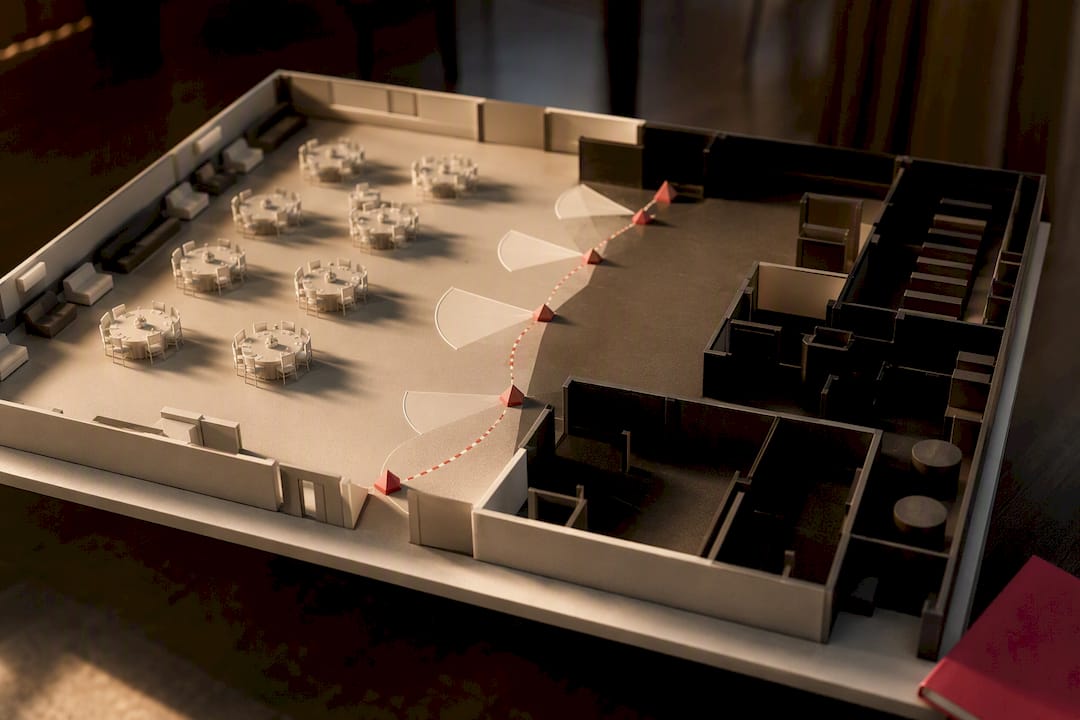
Incident Command and Communications Plan
Radios fail. Cell towers get overloaded when thousands of people try to text at once. That’s why serious event security plans build communications around PACE: primary, alternate, contingency, and emergency channels, tested before doors open, not discovered mid-crisis.
Your radio plan should document:
- Assigned channels for security, medical, and operations teams, kept separate to avoid clutter.
- A check-in cadence so the incident commander knows every post is staffed and responsive.
- Call signs that stay consistent across your entire team, including any subcontracted staff.
CISA’s guidance for large gatherings recommends integrating alert levels into your command structure so escalating threats trigger a pre-agreed response rather than a scramble. Before event day, set a briefing schedule with Boston Police, Fire, and EMS liaisons, and fold your public-address and mass-notification systems into that same incident communications chain, not a separate one.
Crowd Management, Evacuation Choreography, and Medical Staging Tactics
Crowd surges rarely happen because a crowd is unruly. They happen because a venue’s flow was never designed to move that many people at once.
- Design ingress and egress paths that avoid natural choke points, using barriers and clear signage to guide movement rather than relying on shouted instructions.
- Position marshals at every flow-control point, especially where routes narrow or merge.
- Build staggered egress into your plan so the entire crowd isn’t funneled toward one exit at the final song or closing remarks.
- Place your medical and EMS staging area where ambulances can reach it without cutting through the main crowd flow, and make sure security staff know exactly how to hand off a patient to medical triage.
- During a surge or evacuation, staff at flow-control points should redirect movement toward the nearest clear exit rather than the closest one, since “closest” and “clearest” aren’t always the same door.
Timeline and Pre-Event Checklist: 90/60/30/7 Days Out
Boston’s own guidance recommends starting permit discussions 60 to 90 days before large public events, and that timeline should double as your security planning clock.
- 90 days out: Complete your initial risk assessment and begin permit paperwork.
- 60 days out: Submit your Special Events application and EAP, and confirm major vendors.
- 30 days out: Finalize security staffing contracts and licensing verification.
- 7 days out: Run a final site walkthrough and test your communications plan end to end.
Keep a minimum on-site packet ready for inspectors and your incident commander: site map, staffing roster, vendor certificates, and permits. Push your timeline earlier still if you’re hosting high-profile guests, using pyrotechnics, or working a large outdoor site where weather and crowd flow both add complexity.
Author Perspective: What to Expect When Hiring Security for a Boston Event
Some security firms have spent years building event security plans, drawing on law enforcement and loss-prevention backgrounds that favor prevention over reaction. A serious engagement should hand you a written EAP, direct liaison with city agencies, a staffing plan matched to your actual risk profile, on-site supervision, and a post-event debrief, not just bodies in polo shirts standing by the door.
When negotiating scope with any security partner, ask pointed questions about deliverables and timelines before you sign. A firm that can’t describe its incident command structure in plain terms probably hasn’t built one for your venue yet.
— Derek
How Hub Investigative Group Can Help With Event Security Planning
Some security providers offer alternatives to piecing together your Boston event’s safety plan from generic templates and a single hired guard service, providing teams with law enforcement and loss-prevention backgrounds and tailored services.

Request a proposal that spells out your EAP deliverable, staffing levels, supervision structure, and documentation package before you commit. Hub’s event security services team can walk your site, build staffing recommendations around your actual risk profile, and coordinate directly with Boston agencies on your behalf. For events layering in accessibility needs, pairing your evacuation plan with a resource like Live Caption AI’s accessibility checklist helps make sure alerts reach every attendee, not just the ones near a speaker. Reach out to Hub now to start your consultation and lock in a planning timeline that fits your event date.
Official Boston and Federal Guidance for Your EAP
- Special Events Emergency Action Plan Permit — Boston’s submission instructions and site map requirements.
- CISA Venue Guide for Security Enhancements — includes the Mass Gathering Security Planning Tool and Security Enhancements Table.
- Boston Nightlife Best Practices Guide — evacuation and staff-training standards for licensed premises.
Sources
- Boston
- Venue Guide for Security Enhancements | CISA
- Boston event crowd control & safety guide (city laws summary)
FAQ
When Does Boston Require an Emergency Action Plan for an Event?
Boston requires a Special Events Emergency Action Plan and site map once your expected attendance reaches 1,500 or more. Smaller private events aren’t legally required to file one, but most venue managers build a written plan anyway to satisfy insurers and reduce liability.
How Far in Advance Should I Start Planning Event Security?
Start permit and security discussions 60 to 90 days before a large public event. Push that earlier for events with high-profile guests, pyrotechnics, or complex outdoor sites where weather and crowd flow add planning time.
What Should a Private Security Firm Deliver for a Boston Event?
A professional engagement should include a site risk assessment, a written emergency action plan, staffing matched to your venue’s actual risk profile, on-site supervision, and a post-event debrief. Hub Investigative Group’s event security services build these deliverables around Boston-specific permitting and coordination with city agencies.
Who Reviews and Enforces EAP Requirements in Boston?
The Office of Emergency Management reviews your submitted plan, while Boston Police Department, Boston Fire Department, and Inspectional Services conduct site inspections covering security staffing, fire safety, and structural elements like tents and staging. Each department may request separate documentation, so keep your permit folder organized and complete.
What Happens if a Crowd Surge or Medical Emergency Occurs Mid-Event?
Your EAP should define a clear decision point for evacuating versus sheltering in place, with marshals directing crowd flow toward the nearest clear exit and a medical liaison coordinating directly with your EMS staging area. The incident commander makes the final call and communicates it across all radio channels using your tested PACE communications plan.