
Engage a Massachusetts Watch Guard–licensed event security contractor as soon as a demonstration or public gathering lands on your calendar, and get them producing a security-and-operations plan and site map before you file for a permit. Boston ties its permitting approvals directly to the strength of that plan, so success looks like a city-ready document, a verified vendor, and confirmed coordination with local law enforcement, all locked in weeks before the event date.
TL;DR:
- Boston requires a verified Watch Guard-licensed security contractor to produce a detailed security plan and site map at least 20 to 30 days before filing for a permit.
- For events with 1,500 or more attendees, a formal emergency action plan and site map must be submitted to Boston’s Office of Emergency Management.
- A layered security approach includes perimeter control, access screening, lighting, surveillance, trained staff, and written emergency procedures, all developed with the help of CISA’s planning tool.
- Verifying a contractor’s license involves confirming active Watch Guard credentials, reviewing staffing, insurance, and documented plans, rather than relying on investigative licenses.
- Costs vary widely depending on staffing, equipment, staffing ratios, and whether detailed plans are built from scratch; compare line-item bids for clarity.
Table of Contents
- What Should Boston Organizers Do First for Protest Security Planning?
- What Documents Does Boston Require for Protest and Event Security?
- How Does CISA’s Layered Security Approach Apply to Boston Demonstrations?
- How Do You Verify a Massachusetts Security Contractor’s License?
- What Milestones Keep a Protest Security Timeline on Track?
- What Drives the Cost of Hiring Protest Security in Boston?
- Why Local Boston Experience Changes the Permitting Timeline
- How Hub Investigative Group Supports Protest Security Planning in Boston
- Sources
- FAQ
What Should Boston Organizers Do First for Protest Security Planning?
Protest security planning in Boston runs on a clock set by the city, not by your event date. Miss a filing window and even a well-staffed security plan can stall in committee review. Here’s the sequence that keeps you ahead of it:
- File the Outdoor Public Events application right away, noting Boston’s guidance to submit at least 30 days ahead for larger events or 20 days for smaller ones.
- Prepare for the Outdoor Public Events Committee meeting with a production schedule and site plan in hand.
- Engage a security contractor to draft your security-and-operations plan, and a Special Events Emergency Action Plan if your event qualifies.
- Contact Boston’s Office of Emergency Management early. EAP-related site maps go to [email protected], and a police liaison conversation should start in parallel.
- Run your event through CISA’s Mass Gathering Security Planning Tool to surface planning considerations before your first vendor meeting.
Do these five things in order and you walk into permitting with answers already prepared, not homework still owed.
What Documents Does Boston Require for Protest and Event Security?
Boston’s permitting process does not treat security as a checkbox. The city wants to see the actual plan, and for larger events, it wants a formal emergency framework attached to a site map.
- The Outdoor Public Events application requires a production schedule and site plan, and typically routes through committee review with signoffs from relevant departments.
- Events with a capacity of 1,500 or more attendees must submit a Special Events Emergency Action Plan and site map to the Office of Emergency Management.
- A Police Captain signature may be requested depending on the event’s scale and location, alongside the standard production schedule and site map materials.
- Departmental permits for EMS, Fire, or Inspectional Services can apply depending on your venue and setup, per the city’s outdoor event guidance.
These deadlines aren’t arbitrary. A security-and-operations plan takes real time to build correctly, and the city’s filing windows exist precisely because reviewers need that lead time to read it, question it, and sign off before your event date arrives.
How Does CISA’s Layered Security Approach Apply to Boston Demonstrations?
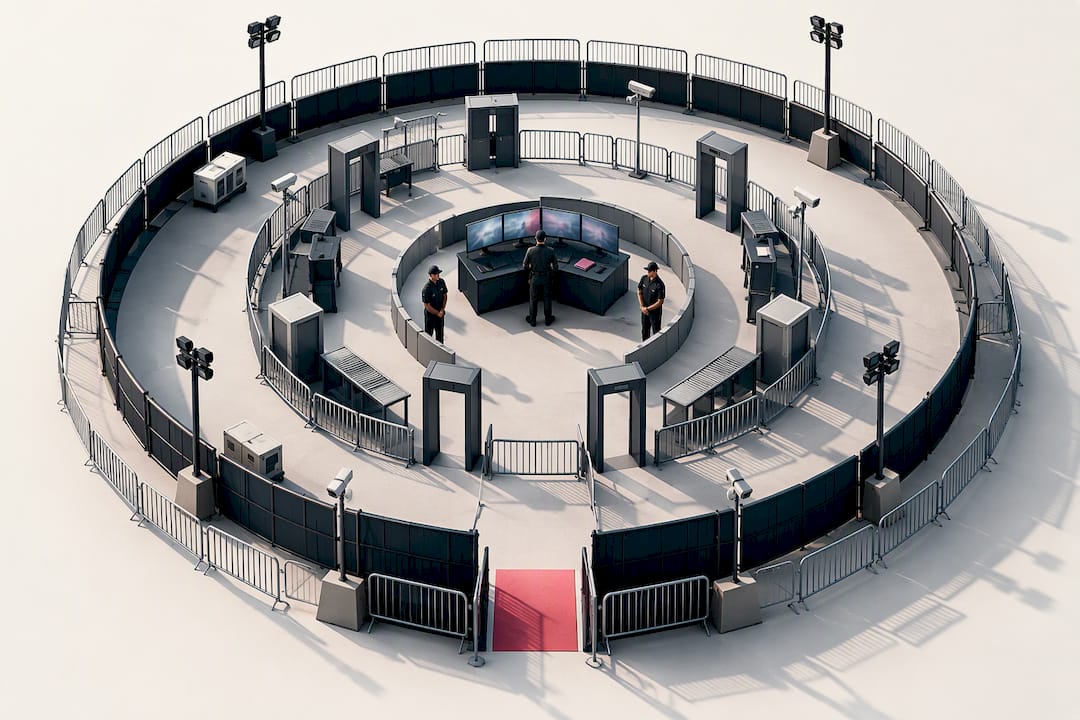
A single guard station at the entrance isn’t a security plan. It’s one control among several that need to work together. CISA’s guidance on securing public gatherings recommends connecting with local authorities, building incident-response plans, training staff, and layering multiple mitigation measures rather than leaning on any one tactic.
In practice, a layered plan for a Boston protest or demonstration includes:
- Perimeter definition and vehicle-mitigation measures at approach points
- Access control and entry screening appropriate to the crowd size and venue
- Lighting and surveillance covering blind spots and egress routes
- Trained crowd-management staff, not just static posts
- Written emergency procedures the whole team has actually reviewed
Pro Tip: Run your event details through the CISA Mass Gathering Security Planning Tool before your first vendor call. It generates a Word-format report of planning considerations you can hand your contractor as a starting brief, which saves a full round of back-and-forth.
Prioritize by cost and complexity. Barriers and lighting are low-cost, high-value additions. Dedicated communications infrastructure and expanded staffing ratios cost more but matter most at high-risk venues. A guard-only approach without screening, surveillance, or a written emergency procedure leaves gaps that show up exactly when you can least afford them.
How Do You Verify a Massachusetts Security Contractor’s License?
Massachusetts runs two separate licensing tracks, and confusing them is the single most common mistake organizers make. A private investigator’s license and a Watch Guard license are not the same credential, and Watch Guard licensing, the one that actually applies to guarding assignments, doesn’t require investigative experience at all.
Before you sign anything, confirm the following:
- The agency holds active Watch Guard licensing, verifiable through the state’s Certification Unit.
- They can produce employee affidavits, proof of insurance, and a current staffing roster on request.
- They’re willing to draft a written EAP and site map in a format Boston’s permitting office will actually accept.
- Their crowd-management training covers de-escalation policy, not just physical positioning.
- They have a stated plan for communications and liaison with Boston Police and OEM during the event, including understanding the use of police body cameras in Massachusetts to enhance transparency and accountability.
A firm’s investigative credentials say nothing about its guarding qualifications, so match the license to the actual job you’re hiring for. Walk away from any vendor who can’t produce a Watch Guard number, hedges on written documentation, or resists showing you staffing rosters and insurance certificates before contract signing. If a due diligence step feels unfamiliar, the process Hub Investigative Group uses for vetting and verification work follows the same logic: confirm credentials before you rely on them.
What Milestones Keep a Protest Security Timeline on Track?
Boston’s filing windows only work if your contractor is producing deliverables on a matching schedule. Build backward from your event date using these checkpoints:
- 60 to 90 days out: initial consultation with your security contractor, especially for large or complex events.
- 30 to 45 days out: draft security-and-operations plan and, if applicable, draft EAP and site map.
- At least 30 days out: permit submission to the Outdoor Public Events Committee.
- 7 to 14 days out: final staffing confirmation and a full site walk-through.
On-site, assign clear roles before the event begins: a security lead, crowd supervisors, a communications lead, a designated police and OEM liaison, and an EMS lead if medical coverage is part of the plan. Run radio checks and a walk-through the day before, and set clear escalation triggers so nobody is improvising a decision chain in the middle of a crowd.
What Drives the Cost of Hiring Protest Security in Boston?
Line-item bids vary widely, and most of that variance comes down to a handful of factors you can compare directly across proposals.
- Guard-hours and supervisor ratios: more staff and tighter supervision raise cost but reduce response gaps.
- Armed versus unarmed positions: armed staffing carries different licensing, insurance, and pay requirements.
- Equipment and barriers: rented barricades, lighting towers, and communications gear add to the base staffing quote.
- Overtime and event duration: multi-day or extended-hour events push costs up faster than headcount alone suggests.
- Permit-related deliverables: a contractor building your EAP and site map from scratch bills differently than one refining an existing draft.
Ask every bidder for a line-item staffing plan, not a flat quote. That’s the only way to compare proposals on equal footing rather than guessing what’s actually included.
Why Local Boston Experience Changes the Permitting Timeline
Boston’s permitting committee reviews plans against city expectations that don’t always show up in generic guidance. A contractor who has already sat across from that committee knows which details get questioned and which get waved through. That local familiarity shortens the back and forth between draft and approval, and it matters just as much once the event is underway. Teams who’ve handled Boston’s mix of foot traffic, transit access, and counter-protest contingencies tend to de-escalate faster and keep lawful assembly and site protection working together instead of at odds.
— Derek
How Hub Investigative Group Supports Protest Security Planning in Boston
Some security providers combine staffing and paperwork services; an experienced team drafts the security-and-operations plan and EAP-ready site map together, delivering materials shaped for Boston’s permitting review rather than generic templates.

An engagement typically starts with a site visit, followed by a draft security-and-operations plan, an EAP-ready site map where your event requires one, staffing rosters, and insurance certificates you can hand straight to the permitting committee. Hub’s event security services cover Watch Guard–licensed staffing for demonstrations and public gatherings of varying scales, and the firm’s emergency response planning work extends into the same EAP documentation Boston’s Office of Emergency Management expects for larger events.
If your event is approaching the 1,500-attendee EAP threshold, start the conversation now rather than after your permit window opens. Request a proposal through Hub’s full services page, and ask specifically for a site visit and a draft plan timeline that lines up with Boston’s filing deadlines.
Sources
- Securing public gatherings
- Special Events Emergency Action Plan Permit
- Apply for or renew a private investigator or watch guard license
- Mass Gathering Security Planning Tool factsheet
FAQ
Do I Need a Permit for a Protest or Demonstration in Boston?
Outdoor public events in Boston generally require an Outdoor Public Events application, and events with 1,500 or more attendees also need a Special Events Emergency Action Plan and site map sent to the Office of Emergency Management. Filing windows run 30 days ahead for larger events and 20 days for smaller ones.
What’s the Difference Between a Watch Guard License and a Private Investigator License in Massachusetts?
They’re separate credentials. A Watch Guard license covers guarding assignments and does not require investigative experience, while a private investigator license covers investigative work and is not automatically valid for staffing security posts.
How Do I Verify a Security Contractor Is Properly Licensed in Massachusetts?
Contact the state’s Certification Unit to confirm active Watch Guard status before signing a contract. Ask the contractor directly for their license number, employee affidavits, and current insurance certificates as part of that verification.
What Does the CISA Mass Gathering Security Planning Tool Actually Produce?
It’s an interactive framework that collects your event and venue details and generates planning considerations along with a downloadable Word-format report. Organizers typically use that report as a briefing document for their security contractor before drafting a formal plan.
How Much Does Protest Security Planning Cost in Boston?
Cost depends on guard-hours, armed versus unarmed staffing, equipment, and whether the contractor is building your EAP and site map from scratch. Hub Investigative Group provides pricing based on a site visit and event scope, available by requesting a consultation through the services page.